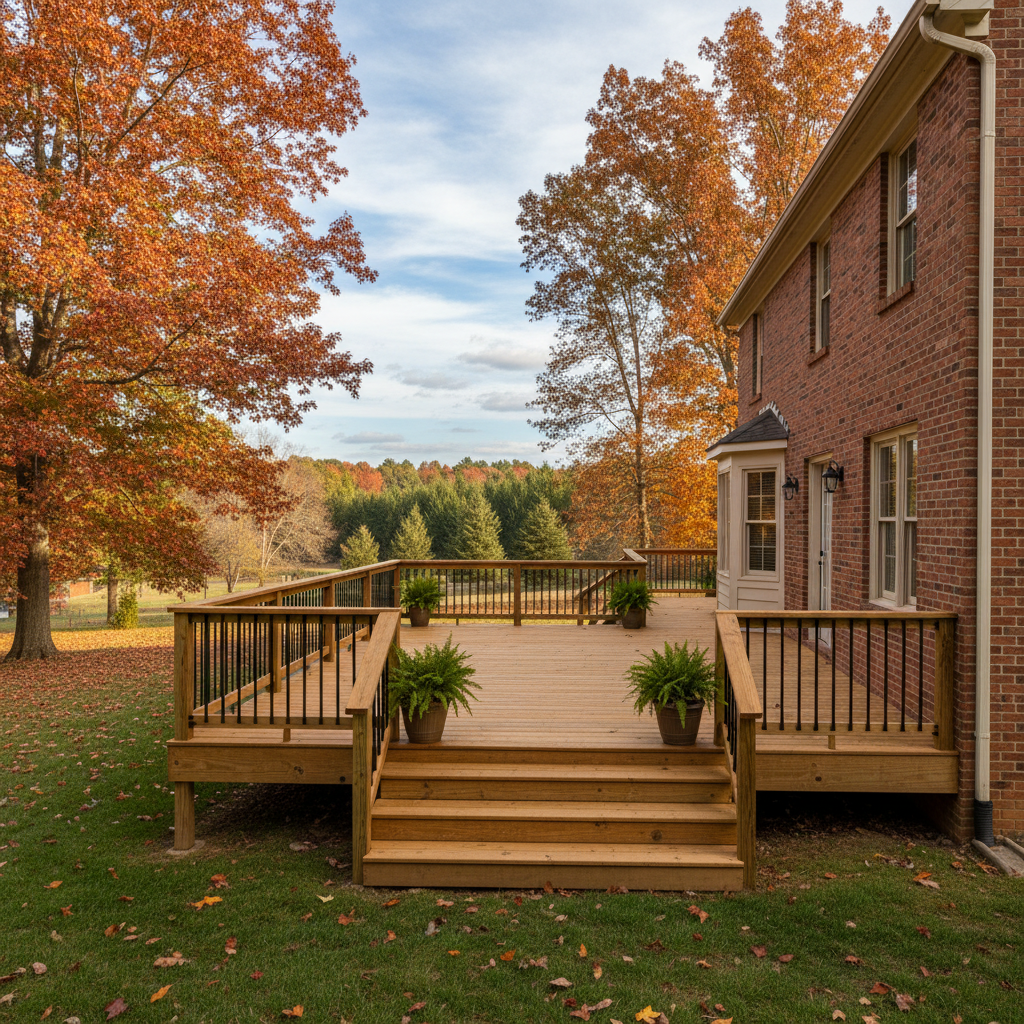
Alright, let's talk about your wooden deck. You invested good money in it, and you want it to last, right? Living here in Spotsylvania Courthouse, we get a real mix of weather – hot, humid summers, chilly winters, and everything in between. That kind of climate is tough on wood, and if you're not thinking seasonally, you're going to see your deck degrade a lot faster than it should.
When's the Best Time to Work on Your Deck?
This is probably the most common question I get. Folks want to know when they should be thinking about staining, sealing, or even building a new deck. The short answer? It depends on the job, but generally, spring and fall are your best friends.
Spring (April-May): This is prime time for cleaning, staining, and sealing. The temperatures are usually mild, not too hot, not too cold. You've got less humidity than summer, which is crucial for stains and sealers to cure properly. Plus, you're getting it ready just in time for peak deck season. If you're thinking about building a new deck, spring is fantastic because the ground isn't frozen solid like winter, and we're not battling the oppressive heat and pop-up thunderstorms of summer.
Summer (June-August): You can still get work done, but it's trickier. Staining and sealing in direct, scorching sun? Not ideal. The product can dry too fast, leading to uneven finishes or poor penetration. Humidity is a big factor too. You want a few dry days for everything to set. For building, we can definitely do it, but my crew and I are chugging a lot more water and starting earlier in the day to beat the heat. Plus, those afternoon thunderstorms can really slow things down. If you're planning a big project, scheduling in summer means being flexible with weather delays.
Fall (September-October): Another excellent window, especially for maintenance. The heat breaks, humidity drops, and you often get a nice stretch of dry, mild days. It's a great time to get a final cleaning done before winter, or to apply a fresh coat of sealer to protect against the upcoming cold and moisture. For new builds, the ground is usually still workable, and you avoid the summer rush.
Winter (November-March): Generally, this is a no-go for most deck finishing work. Stains and sealers need specific temperature ranges to cure, usually above 50°F. Freezing temperatures will ruin the application. Building? We can do it, but it's slower. Frozen ground makes digging footings a real pain, and working with cold materials isn't fun. Plus, you're dealing with shorter daylight hours. Unless it's an emergency repair, I usually advise clients to wait for spring.
How Spotsy's Weather Really Affects Your Deck
Our local climate isn't just about hot and cold; it's about the swings and the moisture. We get a lot of freeze-thaw cycles in winter. That's when water gets into tiny cracks in the wood, freezes, expands, and then thaws, making those cracks bigger. Over time, this leads to splintering, checking, and general deterioration. That's why a good sealer is so important.
Then there's the humidity. Our summers are muggy, which encourages mold and mildew growth on wood surfaces. You see that green or black film? That's what it is. Regular cleaning, especially with a good deck cleaner, isn't just about looks; it's about preventing that stuff from eating away at your deck's surface.
And let's not forget the sun. The UV rays here are intense. They break down the lignin in the wood, causing it to turn that familiar grayish color. A quality stain with UV inhibitors is your best defense against this kind of fading and damage.
I've seen decks in neighborhoods like Lee's Hill and Salem Fields that face south get absolutely hammered by the sun if they aren't properly protected. The wood just dries out and cracks faster. On the flip side, decks in shadier, wooded lots might see more mildew if not cleaned regularly.
Year-Round Protection: What You Can Do
Protecting your investment isn't a one-and-done thing. It's ongoing.
First, clean your deck regularly. I'm talking at least once a year, preferably in spring, with a good deck cleaner and a stiff brush or a pressure washer on a low setting. Don't go blasting it with full power; you can damage the wood fibers.
Second, reapply stain or sealer every 2-3 years. This isn't a hard and fast rule; it depends on the product, how much sun your deck gets, and how much traffic. You'll know it's time when water stops beading up on the surface and soaks into the wood instead. Don't wait until the wood looks completely faded or damaged. Be proactive.
Third, keep it clear. Don't leave potted plants directly on the deck surface without risers. They trap moisture and can cause rot. Move furniture around occasionally to prevent uneven fading. Sweep off leaves and debris, especially in fall, because decaying organic matter holds moisture against the wood.
Fourth, inspect your deck. Every spring and fall, take a walk around. Look for loose railings, wobbly steps, popped nails, or signs of rot. Catching small problems early can save you a lot of headache and money down the road. If you see something concerning, don't hesitate to call someone like us at Paradise Deck Solutions. We'd rather fix a small issue than have you face a major repair or, worse, a safety hazard.
Taking care of your deck isn't rocket science, but it does require a little attention to detail and understanding of our local conditions. Do these things, and your deck will stay beautiful and safe for many years to come.